

What is Forklift Mobile Weighing and What are the Benefits?
Introduction
Forklifts play a critical role in keeping goods moving through warehouses, manufacturing facilities, and distribution centres. But when every load needs to be weighed, transporting it to a separate weighing point interrupts workflow and slows down operations.
That’s why more businesses are turning to forklift mobile weighing systems. By allowing operators to weigh loads directly from the forklift, mobile weighing can help improve efficiency, reduce wasted journeys, and provide greater visibility of goods.
In this guide, we’ll explain what mobile weighing is, how it works, and why it has become an increasingly valuable tool for modern forklift fleets.
Key Takeaways
- Mobile weighing lets you weigh loads during transport, eliminating unnecessary trips to floor scales and saving valuable time.
- By weighing loads during handling, you can save time, reduce labour requirements, and make better use of available warehouse space.
- The systems provide real-time weight data at the point of handling, supporting accuracy, productivity, and smarter logistics decisions.
What is Mobile Weighing?
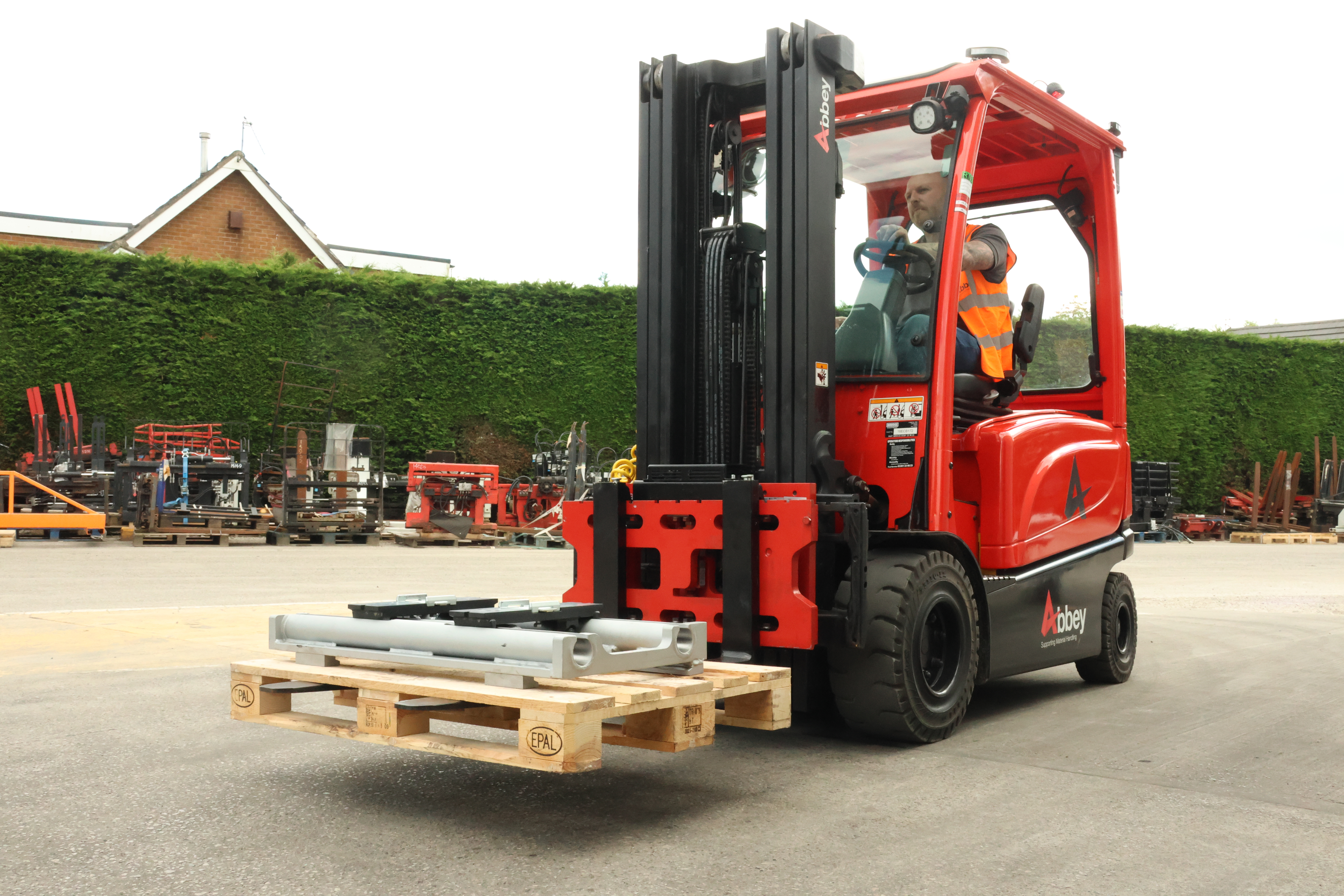
Mobile Weighing allows forklift operators to capture weight data while handling loads, turning the forklift truck itself into a mobile weighing system. Instead of taking loads to a separate floor scale, the weight is measured directly on the forklift during normal lifting, transport, and loading activities.
Unlike conventional weighing methods that rely on fixed scales elsewhere in the facility, mobile weighing systems perform measurements at the point of handling. This means weight data is captured as part of the operation itself, reducing unnecessary movements and making material handling and inventory processes more efficient.
When a load is picked up, the system calculates its weight and displays the result to the operator. The weight is measured at the point of handling, allowing goods to be weighed wherever the forklift is working.
Today, you’ll find mobile weighing technology across a wide range of forklift types, including counterbalance trucks, reach trucks, pallet trucks, and warehouse equipment.
Can I Send Weight Data Directly to My Warehouse System?
Many RAVAS mobile weighing systems transfer weight data directly from the forklift or pallet truck to your warehouse management system (WMS) or other business software using wireless communication.
Solutions such as the RAVAS iForks and RAVAS iCP use WLAN to transmit weight information automatically as loads are weighed. The RAVAS 3200 and 5200 weighing pallet trucks also support wireless data transfer via Bluetooth 4.0.
Instead of manually recording and entering weight data later, operators send information directly from the truck in real time.
This saves time, especially when you handle large volumes of goods each day. Wireless data transfer also reduces the risk of operators recording incorrect weights or losing weighing records during the process.
By automating weight data transfer, you create a faster and more reliable flow of information between your material handling operation and warehouse systems. This reduces paperwork, improves data accuracy, and allows operators to spend more time moving goods and less time managing records.
Should I Use Mobile Weighing?
If weight data is a regular part of your operations, mobile weighing is well worth considering.
One of the biggest advantages is efficiency. Driving a forklift truck back and forth to a floor scale for every load can take up valuable time. On busy sites, operators may also need to queue while other forklift trucks wait to use the same scale, creating further delays. Mobile weighing removes those extra journeys and bottlenecks by allowing loads to be weighed as they are handled.
This helps operators work more efficiently, reduces unnecessary travel around your site, and increases forklift utilisation. Over time, you can lower labour costs while reducing fuel consumption and wear on your equipment.
Mobile weighing can also improve accuracy. Operators can verify load weights immediately, helping to reduce the risk of incorrect shipments, overloaded vehicles and stock discrepancies.
Another benefit is flexibility. Since the weighing system travels with the forklift, weight information is available wherever loads are being handled rather than at a fixed weighing point.
For forklift dealers and OEMs, mobile weighing can provide an additional feature that helps customers improve efficiency. For end-users, these systems offer a practical way to reduce wasted travel and streamline day-to-day operations.
That said, if weighing only takes place occasionally, a traditional scale may still be the better option for you.
The Best Forklift Mobile Weighing Options
1. RAVAS iForks

Key Features
- Direct weight measurement at fork level
- Quick installation without major modifications
- Available in iForks-32 and iForks-52 variants
Pros
- Ideal for existing forklift fleets
- Wireless load cells integrated into forks
- Easy installation and system deployment
Cons
- Less suited to harsh operating environments
The RAVAS iForks integrate loadcells directly into the forklift forks, allowing operators to weigh loads as they lift them. By measuring weight at the forks, operators capture accurate weight data without moving goods to a separate weighing station.
RAVAS builds all weighing technology directly into the forks, creating a compact wireless solution that requires minimal modification to the truck. This allows businesses to add weighing capability to existing forklift fleets quickly and efficiently.
This option is available in two variants. The iForks-32 provides accurate load weighing and clear weight display at the forklift, while the iForks-52 adds advanced data communication and system integration capabilities.
Bluetooth connectivity and data communication options allow operators to record weighing information and integrate it into wider warehouse workflows. These features help improve stock accuracy, support traceability and reduce the risk of dispatching loads with incorrect weight information.
The iForks perform best in most warehouse and logistics environments, although extremely demanding applications may benefit from a more heavily protected weighing solution. Even so, RAVAS engineers the iForks to withstand tough day-to-day use and deliver reliable weighing performance across a wide range of material handling operations.
2. RAVAS iCP (Weigh in Motion)
 Key Features
- Carriage-mounted weighing system
- Weigh-in-motion technology
- Durable industrial construction
Pros
- Weigh loads without needing to stop the forklift truck
- Weighing accuracy to within 0.4% of applied load
- Loadcell and cables are securely protected
Cons
- Reduces the forklift lift capacity
The RAVAS iCP lets you capture load weights during normal forklift operation. Its weigh-in-motion technology measures loads while the truck continues moving, eliminating the need for operators to stop and carry out a separate weighing step.
By removing repeated weighing stops, you reduce handling time and keep goods moving through your operation. Sites that process large volumes of pallets can improve efficiency by streamlining each movement.
The system delivers weighing accuracy of up to 0.4% while in motion, giving operators reliable weight data without disrupting their workflow. This makes the iCP a strong choice for applications that demand both speed and accurate weight information.
The iCP also protects its weighing components through a robust carriage-mounted design. The load cells, cables, and junction boxes are positioned behind the carriage, shielding them from impacts, dirt, and debris encountered during daily operations.
By integrating the weighing system directly into the carriage, RAVAS creates a highly durable solution that handles intensive forklift use with ease. If you need accurate mobile weighing and long-term protection for critical weighing components, the iCP delivers both without compromising productivity.
3. RAVAS Weighing Pallet Trucks
 Key Features
- High-contrast display ensures great ergonomics
- Bluetooth and data communication options
- Compact and easy to manoeuvre
Pros
- Clear operator visibility
- Weighs loads up to 2,000 kg
- Automatically adjusts weighing resolution
Cons
- Manual operation may not suit every application
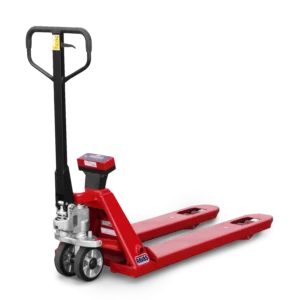
RAVAS weighing pallet trucks combine pallet handling and accurate mobile weighing in a single piece of equipment. Integrated load cells capture weight data directly from the truck, allowing you to transport and weigh loads at the same time without introducing extra handling steps.
The range offers weighing capacities of up to 2,000 kg, making it suitable for goods-in operations, dispatch areas, production facilities and general warehouse applications. The compact design also allows operators to manoeuvre easily in areas where larger equipment may be less practical.
RAVAS integrates a high-contrast display into the iPT Essential handle. Across the rest of the range, RAVAS positions the indicator on the chassis.
Both display types are positioned upwards towards the operator, making weight information easy to read throughout the task. Operators can check weight data naturally while working instead of leaning forward or changing position to see the display.
The pallet trucks also use multi-range software that automatically adjusts weighing resolution according to the load weight. This improves weighing accuracy across different weight ranges and removes the need for manual adjustments.
Most models offer Bluetooth connectivity, built-in printer options, and data communication capabilities that transfer weight information directly into WMS and ERP systems. Combined with their lower total cost of ownership, RAVAS weighing pallet trucks provide a practical and efficient way to introduce mobile weighing into everyday warehouse operations.
4. RAVAS Hydraulic Weighing
 Key Features
- Hydraulic pressure-based weighing technology
- Independent mast functionality
- Available as RCS and RCS+ models
Pros
- Lower total cost of ownership
- Excellent visibility while moving loads
- Compatible with most forklift attachment types
Cons
- Lower accuracy than the load-cell systems
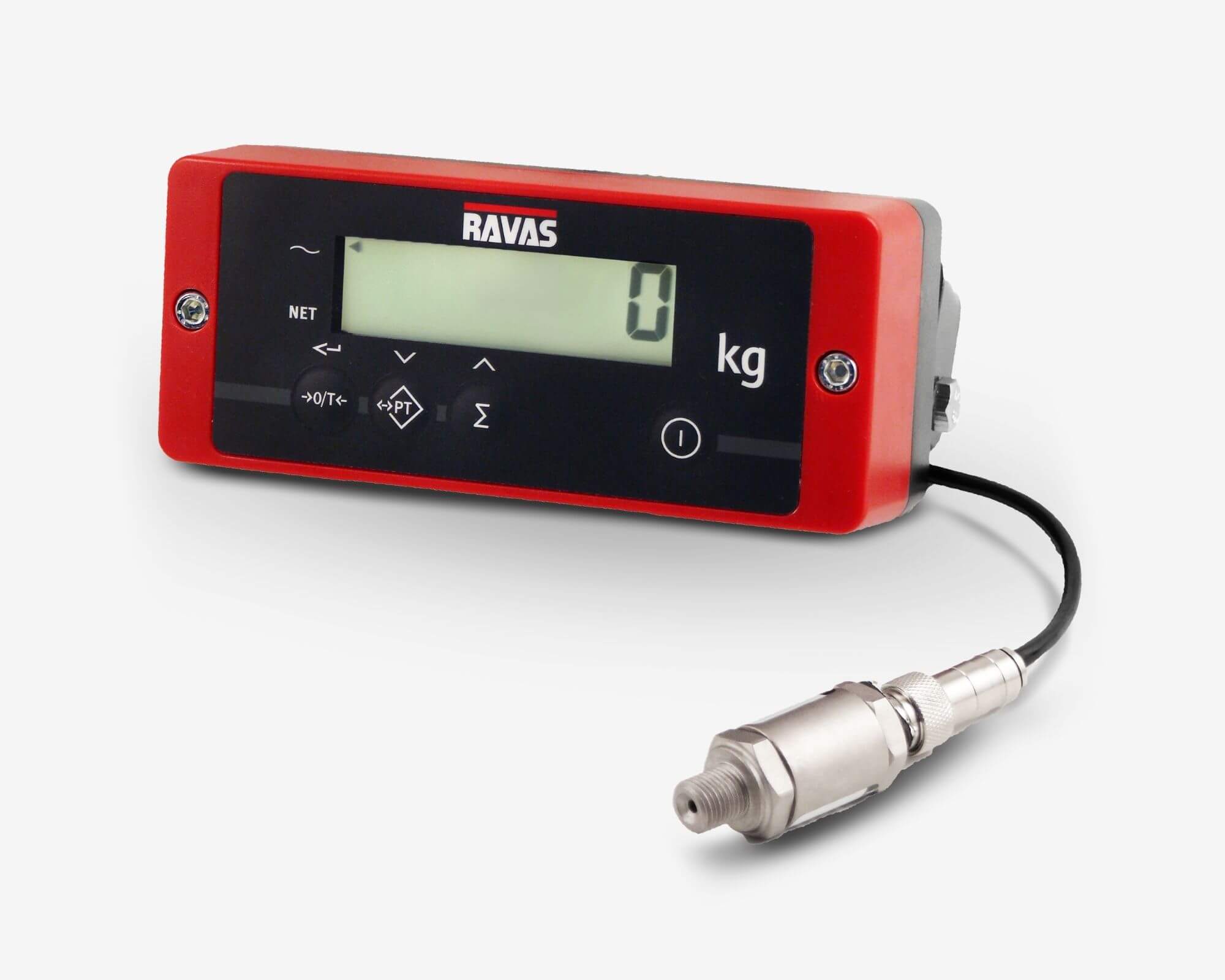
RAVAS hydraulic weighing calculates load weight by measuring hydraulic oil pressure within the forklift’s lifting cylinders. Instead of fitting load cells into the forks, the system measures pressure changes in the hydraulic circuit and converts them into weight data, giving you a simple and highly durable weighing solution.
You can retrofit the system to almost any make, model, or age of forklift, allowing you to add weighing capability without replacing equipment or changing existing handling processes.
The system maintains independent mast functionality, allowing the mast to continue lifting normally while the system calculates load weight. Because RAVAS mounts no weighing components to the carriage or forks, the system adds zero thickness and zero deadweight to the front of the truck.
As a result, the forklift retains its original lifting capacity and maximum forward visibility. This allows you to accurately weigh specialist attachments such as paper roll clamps, bale clamps, side-shifters and more. Overall, the system gives you greater flexibility across different handling applications.
RAVAS hydraulic weighing systems are available in two variants. The RCS provides straightforward load weight verification for everyday weighing tasks, while the RCS+ adds piece counting, weight accumulation, and advanced weighing functions.
The one nitpick is that the weight accuracy will be lower than the loadcell options. But, if you’re after a compact, versatile weighing system with easy installation, the RCS/RCS+ systems would be ideal for you.
Finding The Right Mobile Weighing Option For You
If you need flexibility across different trucks, the RAVAS iForks are often a good fit. These weighing forks include built-in load cells, making them ideal for logistics operations, cross-docking, mixed fleets, and applications that use truck rotators or fork positioners.
For intensive warehouse operations where forklifts are constantly moving loads, the RAVAS iCP may be the better choice. This carriage-mounted system installs directly onto the forklift carriage and keeps the weighing equipment permanently integrated with the truck.
The robust design makes it well suited to demanding environments, high-frequency handling, and trucks fitted with attachments such as clamps. If your operation relies on permanent weighing and maximum durability, a carriage-mounted system is often the preferred option.
If your main goal is simple weight verification, overload prevention, or basic load monitoring, RAVAS Hydraulic Weighing systems offer a practical solution. These systems use sensors within the hydraulic circuit to estimate load weight and are designed for straightforward installation and a lower total cost of ownership.
The RCS is ideal for standard weighing, while the RCS+ adds extra functionality for businesses that require more advanced weighing features and data handling. Hydraulic systems are particularly useful in outdoor, rough-terrain, or less controlled environments.
For operations that do not rely heavily on forklifts, RAVAS Weighing Pallet Trucks can be a cost-effective alternative. They combine pallet handling and weighing in a single unit, allowing you to verify weights without transporting loads to a separate scale.
Their compact design and excellent manoeuvrability make them particularly useful in smaller warehouses, production areas, retail environments, and any application where goods are moved manually rather than by powered forklifts.
FAQs
Can you add a scale to a forklift?
A scale can be added to a forklift using a purpose-built forklift weighing system. These systems are fitted to the forks, carriage, or hydraulic circuit to measure load weight during normal handling. Installation depends on the truck type and weighing accuracy required.
What is a forklift weighing scale?
A forklift weighing scale is a system that measures the weight of loads directly on a forklift truck. It removes the need to travel to a separate floor scale for many weighing tasks. Depending on the model, weights can be displayed, stored, printed, or shared digitally.
How much does a standard forklift weigh?
The weight of a standard forklift typically ranges from 3,000 kg to 5,000 kg, depending on its size and capacity. Larger counterbalance trucks can weigh considerably more. The truck’s weight includes the chassis, mast, counterweight, and other key components.
Final Thoughts
And there you have it, that’s our guide to forklift mobile weighing and how these systems can dramatically improve the efficiency of your business operations.
Remember, the right system depends on how your business works, the loads you handle, and the information you need to capture. Taking the time to understand the options available will help you choose a solution that supports your operation and delivers the most value day to day.
